· By The Hidangi Team
A Customer Loyalty Program Without Making Customers Download Another App
When a guest places a valid QR order and leaves a phone number, Hidangi quietly builds their customer profile in the background — no signup form, no loyalty app to install. A configurable points program runs on top of that profile: points accrue automatically from qualifying orders, and staff redeem them at the counter. The customer never opens an app to do any of it.
How does a loyalty program work if the customer never signs up?
It works because the "signup" already happened as a side effect of ordering. Most loyalty platforms ask a customer to do extra work: download an app, create a password, verify an email, opt into notifications during onboarding. Every one of those steps loses people. Hidangi skips all of it by using data that already exists — the phone number a guest enters to place a QR order at the table.
The first time that phone number appears on a valid order, Hidangi creates a lightweight profile behind the scenes: order history, visit frequency, and (if the restaurant has switched it on) a loyalty points balance. There's nothing for the guest to install, confirm, or remember. The next time they scan the table QR and order with the same number, the system recognizes them as a returning customer automatically.
Does the customer need to sign up for anything?
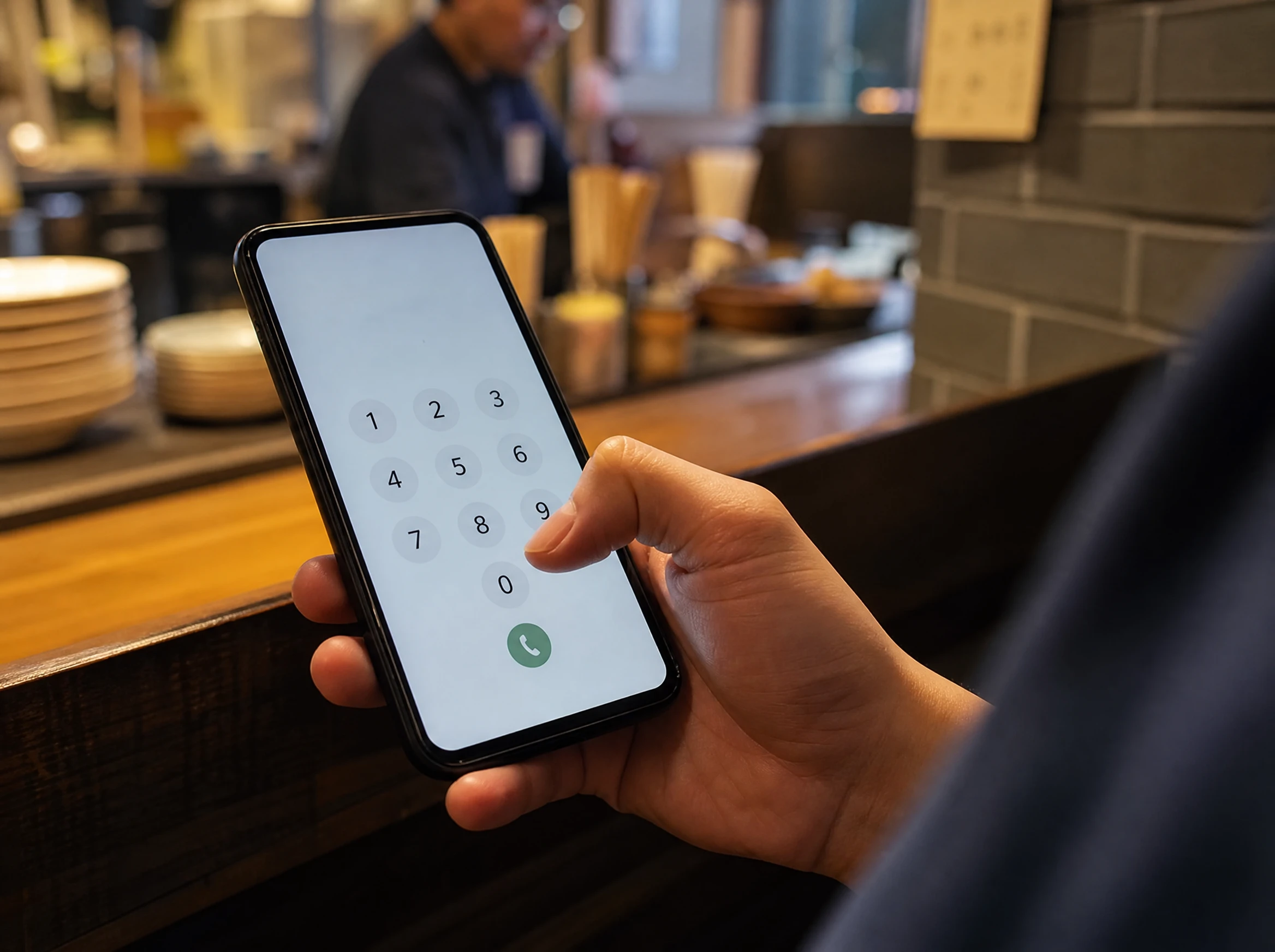
No. There is no separate loyalty signup, no account creation, and no app download on the customer side. The guest-facing experience is the same responsive web page they already use to order — scan the QR, browse the menu, enter a phone number to place the order, pay at the counter after they eat. The profile and any points accrual happen on the restaurant's side of the system, triggered by that order.
Can the restaurant message customers who didn't opt in?
No. Marketing contact (WhatsApp or SMS) is opt-in and unchecked by default. A phone number captured for order delivery is not, by itself, permission to market to that person — the restaurant has to get explicit consent before it can reach out. If a customer never checks that box, Hidangi will not let the restaurant treat their number as a marketing contact. This is deliberate: a phone number that exists so the kitchen can find a table is a different thing from a phone number a customer agreed to be contacted on, and the system keeps those two uses separate.
How do customers actually earn and use points?
- Profile creation — happens automatically the first time a phone number appears on a valid QR order. No customer action beyond ordering as normal.
- Points accrual — a configurable points program runs on qualifying orders; the restaurant sets the rules, and the system tracks the running balance against the customer's profile.
- Consent controls — WhatsApp/SMS marketing contact is a separate, opt-in toggle a customer has to actively agree to; it stays off unless they say yes.
- Redemption — points are redeemed by staff at the counter, the same moment the bill is settled, not through a self-serve code or coupon the customer generates themselves.
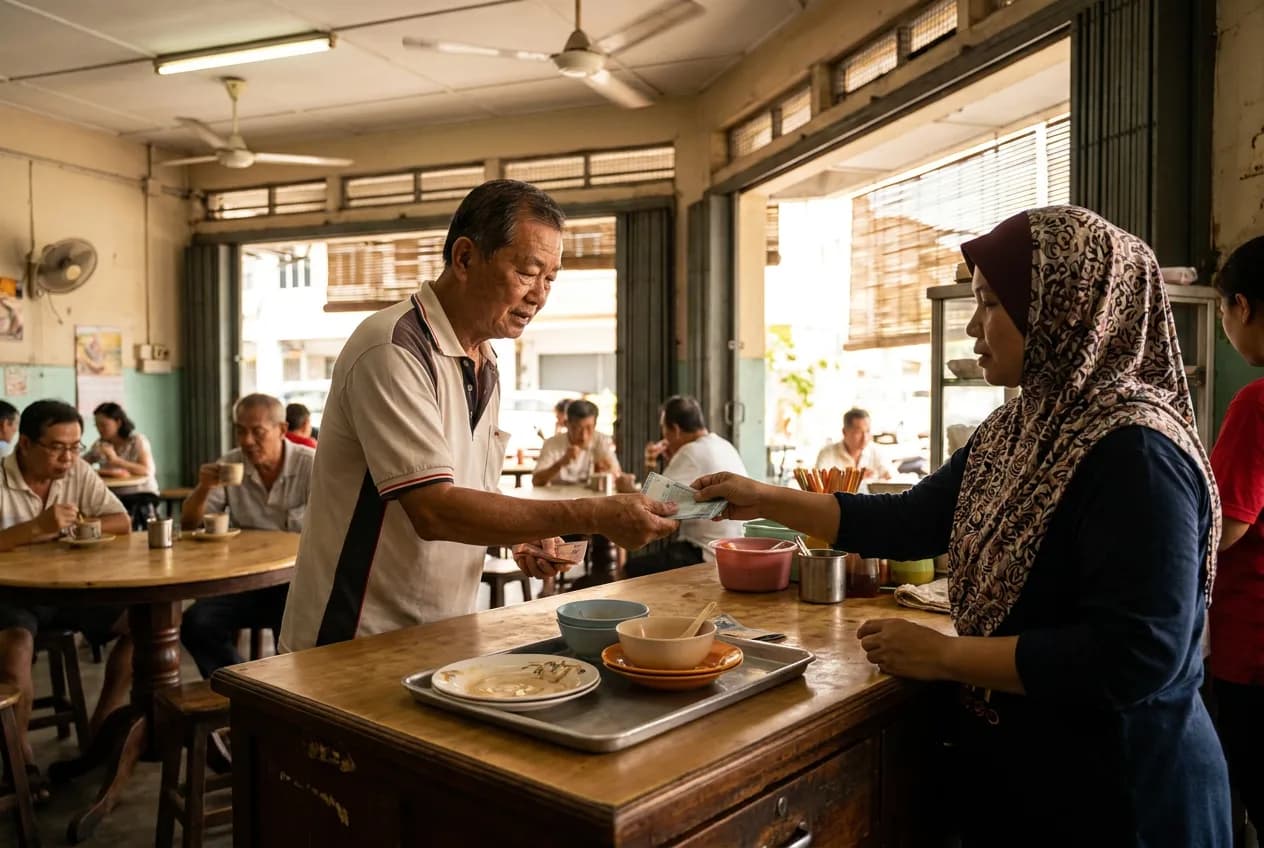
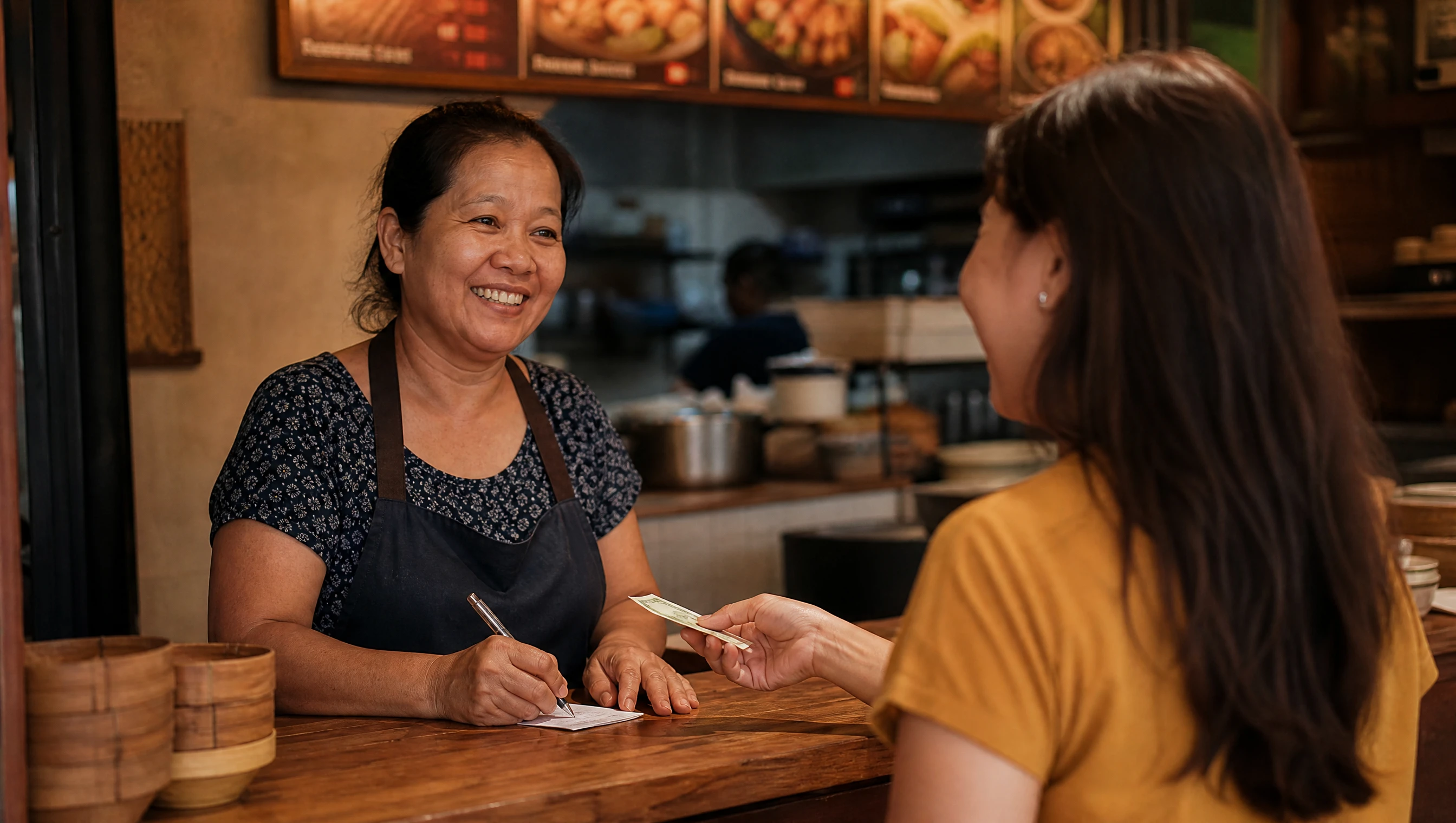
That last point is the real difference from most loyalty apps. There's no customer-facing "redeem" button, no auto-generated discount code, no barcode to scan against a kiosk. A staff member looks up the customer (usually by the phone number tied to their order) and applies the redemption manually, the same way a familiar regular has always been treated at a small restaurant — just with the balance tracked properly instead of remembered by one staff member's memory.
Typical loyalty app vs. Hidangi's counter-redeemed model
| Typical loyalty app | Hidangi | |
|---|---|---|
| Friction for the customer | Download app, create account, verify | Just place a QR order with a phone number |
| Setup effort for the restaurant | Configure a separate app, print signage, train on a new tool | Points program runs on order data already flowing through the system |
| Redemption method | Self-serve in-app code or scannable coupon | Staff-assisted redemption at the counter |
| Marketing contact | Often bundled into signup by default | Opt-in only, unchecked by default |
Why staff-assisted redemption instead of automated coupons?
Because it matches how a small restaurant actually runs. A one- or two-person operation doesn't want to manage a separate loyalty app, a coupon-code generator, or a support inbox for "my code didn't work." Staff-assisted redemption keeps the moment where trust already exists — the counter, at the end of a meal — as the moment the reward gets applied. It's closer to how a regular has always been treated ("you're a regular, that's on the house today") than to how a chain's app-based punch card usually feels.
Frequently Asked Questions
Does the customer need to download anything? No. Ordering happens on a responsive web page opened by scanning the table QR code. The loyalty profile is built from that order automatically — there is no separate loyalty app for the customer.
Does entering a phone number to order automatically sign someone up for marketing messages? No. Order-related phone numbers and marketing consent are handled separately. WhatsApp/SMS marketing contact requires an explicit, unchecked- by-default opt-in before the restaurant can use that number to reach out.
How are loyalty points redeemed? By staff, at the counter, at the time the customer is there — not through a self-serve code, coupon, or in-app redemption flow.
Is the loyalty program required, or does it run for every restaurant automatically? It's a configurable feature the restaurant sets up and defines the rules for. A customer profile forms from qualifying QR orders regardless, but points only accrue where the restaurant has turned the points program on.
Does Hidangi send the marketing messages automatically? Hidangi captures the opt-in and the profile; whether and how a restaurant follows up is a decision the restaurant makes, always bounded by the customer's consent choice.
If you're running a small restaurant and have wondered whether a loyalty program is worth the overhead of yet another app, this is the version built for exactly that hesitation — no app for your customers to install, and no new system for your staff to babysit at the counter.